Essay 1: “What is the Perennial Philosophy—in a Nutshell?”
Essay 1 (2026): “What is the Perennial Philosophy—in a Nutshell?”
Recently I’ve been working on my ‘elevator pitch’ for my most recent book, The Perennial Philosophy Reloaded. You can decide if I’m getting anywhere, and feel free to tell me what you really think. I can take it; feedback is always useful. LOL
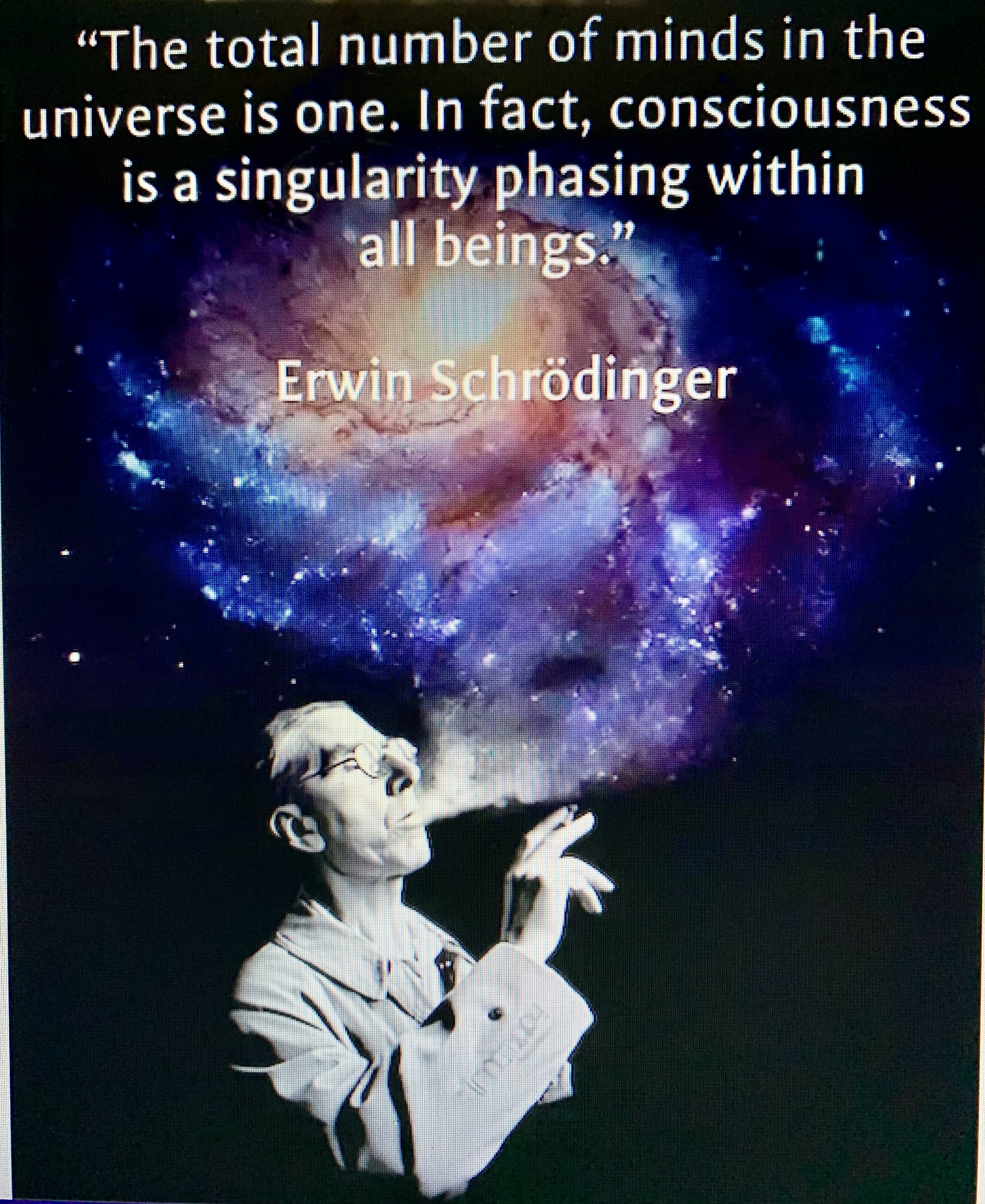
Basically, the perennial philosophy is the viewpoint that there is an innate spirituality built into our relationship with the universe. We don’t have to conjure up something to believe in, we have to drop—experientially speaking—into the place where we become one with everything, knowing in our bones that we belong.
Unpacking this for a moment, Aldous Huxley whittled his elevator speech down to four points:
THAT underlying the world of physical existence there is an immutable “Ground of All Being” supporting it.
THAT this Ground of Being transcends the world of time and space but also takes form as the world of time and space, with no firewall between the two. The Ground of Being rises up into creation like an ocean rises up in waves. The ocean is one; the waves of existence are many.
THAT people are capable of experiencing themselves on both these levels of existence—as ‘ocean’ and ‘wave’—because at the root of their individual being is the same exclusive Ground of All Being.
THAT “knowing thyself” requires knowing oneself fully, as an individual but also as a psyche capable of experiencing a transcendent aspect of itself—an aspect that is consummate with all reality.
That’s it. If it doesn’t sound like much, let me add that it most certainly is. When people are open to what I call the “unitive mystical experience,” the experience of their oneness and profound interconnection (some have called it “inter-being”), they commonly return with a recalibrated view of their place in the world. They gain a sense of intimacy with all things because something of the Ground of All Being follows them back out into the world of everyday life. In my book, I liken this to the “Overview Effect” reported by astronauts, who claim their voyages into space reoriented their perspective in a new direction, the direction of “we’re all in this together because we’re all part of one thing.”
People find different ways of cultivating the unitive mystical experience, for example using meditation, time spent in nature, sensory deprivation tanks, psychedelic medicines, music and art, loving relationships, etc. Which of these is best? I’m not a ‘one size fits all’ kinda guy; I think some techniques work best for some people but not for others, and I subscribe to the principle of “causal indifference.” That is, if a technique generates the unitive experience, its effectiveness is inherently proven.
But what are the details of the perennial philosophy? What are the characteristics of the unitive mystical experience? How should the unitive mystical experience be interpreted philosophically? What are the ramifications of regularly cultivating the unitive mystical experience? What does the perennial philosophy say about art, religion, nature, relationships, ethics, psychology, etc.? Frankly, there are a range of fascinating theories and I have few settled opinions about any of them. I put a premium on the experience itself and enjoy staying open to a range of possible interpretations and theories. In The Perennial Philosophy Reloaded, I share those theories and invite readers to make up their own minds about which of them best informs their particular journey. I hope you’re curious enough to take a read.