
An E-course on the Perennial Philosophy
Here’s a description of an E-course I’m giving for the group “Spirituality & Practice. You can sign up for it as a series of essays, followed by a live on-line discussion, Monday, May 11 - Friday, June 05, or receive the essay anytime after. Sign up via this link and check out the description below.
https://www.spiritualityandpractice.com/ecourses/course/view/10351/the-perennial-philosophy
In 1897, Paul Gauguin summed up life’s biggest questions in a triptych of paintings titled “Who are we? Where do we come from? Where are we going?” Since the beginning of time, our species has looked up to the sky and wondered about our nature and its destiny. All religions and philosophies have proceeded out of that wonder. In this e-course, we explore a range of answers to life’s biggest questions drawn from the Perennial Philosophy, a family of perspectives whose early advocates in the twentieth century have included Aldous Huxley, Huston Smith, Rene Guenon, Alan Watts, Frances Vaughan, Ram Dass, and Stanislav Grof, and today include such authors as Father Richard Rohr, Rabbi Rami Shapiro, Mirabai Starr, Joan Borysenko, Ken Wilber, Karen Armstrong, Rupert Spira, and Dana Sawyer.
Perennialists share the view that there is a spirituality built into our nature — that is, inherent in the relationship of our nature to Nature itself. Moreover, perennialists hold that the foundation of this spirituality is based on direct experience and expanded consciousness rather than either faith or adherence to a set of ideas (though, as we shall see, ideas have their value). Specifically, perennialists believe that we find in all cultures, everywhere and always, reports of a unitive mystical experience, an experience that registers as “I became part of everything and everything became part of me” or “I dissolved into oneness with the sacred” or “My ego melted away and I became one with ultimate reality.”
All perennialists put a premium on this unitive mystical experience or UME, but there are nuances of how the experience is interpreted and expressed, which is why the perennial philosophy includes a range of ideas on such subjects as the nature of the psyche, human relationships, our relationship to nature, the value of religion, the nature of art, the possibility of enlightenment, etc.
You will receive 12 emails during this one-month course, sent to you on Mondays, Wednesdays, and Fridays.
The e-course begins with an overview of the Perennial Philosophy in general, specifically as a series of five essays answering these specific Big Questions of Life: What is the nature of consciousness and why is that important? What are we anyway? What is the nature of this reality we’re born into? What is the goal or purpose of our existence — as both individuals and a species? How can we reach that goal.
Then, once we have a basic understanding of the shared position, we push forward, teasing out a range of perennialist perspectives on such topics of interest as the nature of spiritual awakening, human relationships, the place of religion, environmental concern, and the place of art.
Our course ends with a set of three essays dealing with how to integrate the unitive mystical experience into daily life.
We will also have a one-hour Zoom call to have a lively exchange with Dana Sawyer. This will be held on May 28 at 5:00 pm PT/8:00 pm ET. It will be recorded for review or later listening if you can’t join it live.
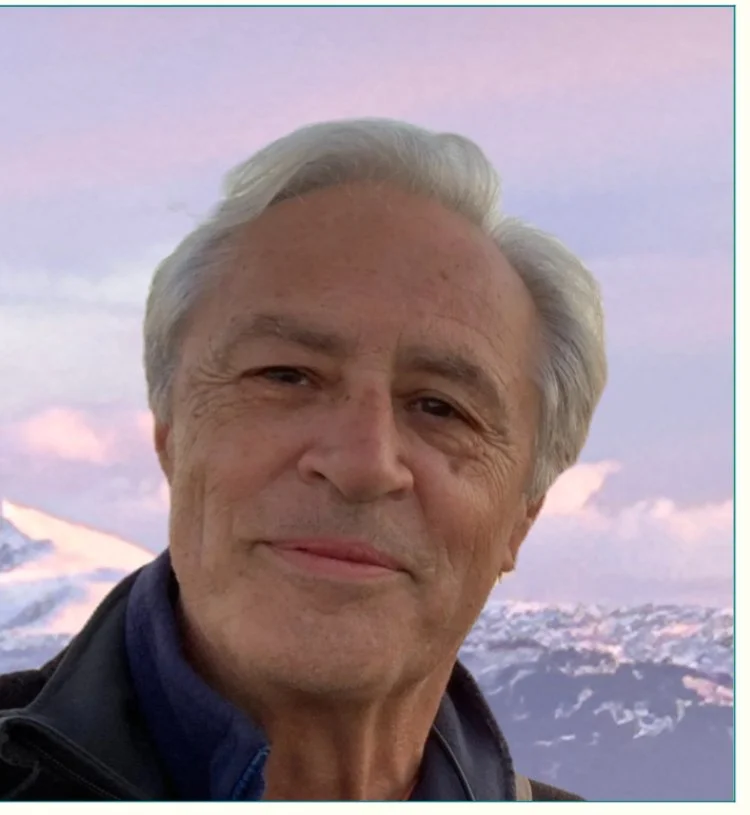
Dana Sawyer is professor emeritus of philosophy and religious studies at the Maine College of Art & Design and recognized as an academic authority on the Perennial Philosophy in the world today. In addition to writing biographies of two key perennialists, Aldous Huxley (2002) and Huston Smith (2014), Sawyer has also recently published a lively and popular overview of the perspective in The Perennial Philosophy Reloaded(Monkfish, 2024). Sawyer is a member of the advisory board of the Chaplaincy Institute of Maine.