
Essay 5: “Faculty X.”
(Note: In my next blog, I’m returning to the subject of art and its value. Meanwhile, I’m delivering on my promise of going deeper into the issue of interpreting the unitive mystical experience art, meditation, nature, and psychedelics sometimes triggers.)
Many years ago, as an undergraduate in the early 1970s, I read Martin Heidegger’s book Discourse on Thinking. In a chapter titled “The Memorial Address,” Heidegger discussed the difference between “calculative thinking” and “meditative thinking,” arguing that philosophers, as well as everyone else, should do more of the latter. Getting specific, Heidegger advocated a form of meditation—based on his understanding of Meister Eckhart and Zen—he termed gelassenheit, or “letting be,” arguing that it allowed human beings to connect with their Being at a more fundamental, ontological level. In brief, he believed that when we settle into the root of our being, we merge with Being at the root of everything.
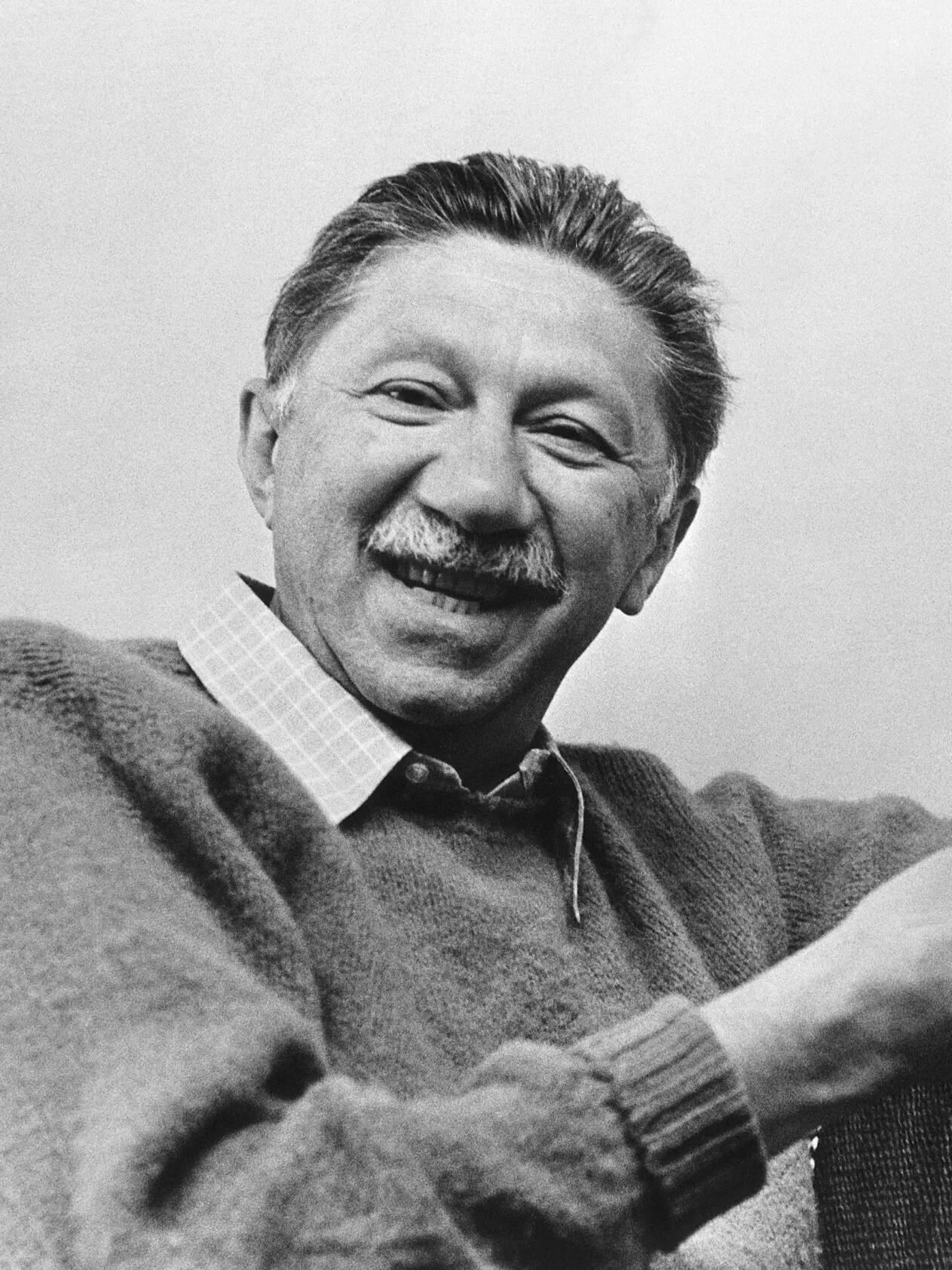
During that same semester, I took a psychology class in which we read a book about “Third Force” psychology, an alternative to “depth psychology” (e.g., Freud and Jung) and “Behaviorism” (e.g., B.F. Skinner). The primary advocate for this new approach—in terms of both theory and practice—was Abraham Maslow, whose book Toward a Psychology of Being was a hit at that time. As synchronicity would have it, Maslow was arguing a point very similar to Heidegger’s, that connecting with Being at a cosmic level was not only a human potentiality but a treatment plan—useful not only for those in psychological distress, but for all of us. He wished not only to help “insane” people become “sane,” but to help sane people become more sane, a state he called “self-actualization.” Consequently, he had become interested in meditation, yoga, breathing techniques, psychedelics and other tools for moving beyond ego-striving into what he described as “unitive consciousness.” Tastes of this higher state, he believed, come to us as brief glimpses that he termed “peak experiences,” sometimes also triggered by art.
What struck me most as I was reading Heidegger and Maslow that semester was the very unusual notion that the search for truth, as the answer to the meaning of human existence, was to be found in a state of consciousness rather than a settled, somehow confirmed, set of ideas. As a philosophy major, I had previously accepted, without question, that calculative thinking was going to get us where we needed to go—that had been the assumption of the entire western philosophical tradition from Plato forward! Someday, somehow, one or other brilliant philosopher would put together a system of thoughts that would trump all others, becoming the Holy Grail of philosophy: an unassailable Truth.
Consequently, it was something of a shock to consider that we philosophers might have been barking up the wrong tree—epistemologically speaking—for centuries, at least with regard to finding a form of truth most meaningful to humanity.
Intrigued by this new possibility, I began ravenously reading books dealing with experiences of higher states of consciousness, including those by Aldous Huxley, Alan Watts, and J. Krishnmurti. I also started practicing yoga, trying psychedelics, and learning Transcendental Meditation, studying for a time with the same guru as the Beatles. Lucky for me, one of my philosophy professors, Robert Rice, was a broad minded guy who enjoyed my meanderings about consciousness expansion. He even shared some of my doubts about the viability of calculative thinking to ever deliver a fully satisfying truth to humanity. Then one day he sent me home with an essay by Bertrand Russell expressing the same doubt.
Russell was the primary spokesman of analytic philosophy in the early Twentieth Century. However, Ludwig Wittgenstein then came along, as Russell’s graduate student at Cambridge University. Initially, Wittgenstein adopted Russell’s own viewpoint, but later rejected it with arguments that undermined not only Russell’s “logical positivism,” but most of western philosophy. Wittgenstein wrote so convincingly about philosophy as largely a series of “language games” (so much to say here!) that Russell, the former teacher, became the student, losing confidence in his—or anyone’s—ability to think their way into Truth with a capital “T.” In the essay, Russell shared his dismay, ruminating that the only definite gain to humanity of a new philosophical position—in the long history of philosophical positions—was that it freed us from the previous position.
I think that if I had read this essay before reading Heidegger, Maslow, and Huxley, I would have changed my major to something else. Instead, I simply shifted my attention in a new direction, toward Asian philosophy, on the grounds that Hindu, Buddhist, Taoist, and Jain systems of philosophy emphasized upgrades in consciousness, rather than ideas, as the higher form of truth and knowing.
In the 1970s, there were lots of us in the youth culture/ hippie culture who were embracing alternative approaches to truth and meaning, but people in the mainstream didn’t know what to make of it all. It sounded flaky, seeming to involve incense, long hair, and pachouli. Consequently the blanket of “New Age” was thrown over everything from Zen to aroma therapy and from UFOs to Women’s Lib, whether there were any connections between these interests or not. Even my fellow philosophy majors were reticent to reject the analytic method as the exclusive doorway to Truth. “How can you prove there are higher states of consciousness or more meaningful ways of knowing?”, they would ask me. My answer, based on the books I was reading, was, “Well, not by restricting my inquiry to thinking alone. I’m exploring meditation and other ways of knowing to see for myself what they have to offer.” And now we come to the heart of this essay.
We know things in a great number of ways; in fact, the entire sub-discipline of philosophy, termed epistemology, deals with how we know what we know. For instance, if you tell me that it’s going to rain in two hours, and I ask you how you know, you could say any number of things. “I heard it on the radio,” “I have a barometer in my house,” or “My neighbors cows are lying down in the field.” But it’s important to recognize that we also know things—things that are deeply meaningful—in ways that don’t depend on thinking or ‘making sense.' These are forms of knowledge involving what are termed in philosophy qualia-related content—including, by the way, all moral decisions, aesthetic decisions, and value decisions. For instance,
When we attend a music concert or visit an art museum, finding ourselves deeply moved and edified, these experiences are meaningful, but what, on a discursive level, do they actually mean? Note that they deliver their own form of meaning—and we know the value of that meaning directly, in ways that are self-validating, requiring no philosophical explanation. Of course, philosophers, critics, and art theorists give us explanations for why art and music have value, but these critiques do not make art and music themselves obsolete. Art and music provide truth in ways we can never derive from ideas alone. Similarly, mystical experiences (including the unitive mystical experience of oneness with all reality or profound interconnection with nature) deliver experiential forms of knowledge that transcend interpretations of them, and in both cases, mystical or aesthetic, we are, according to the perennial philosophy, moving into more lucid states of consciousness, apprehending experientially more of what we truly and fully are.
But, the rational mind wonders, how can you be sure? How can you know this is happening? What method of knowing are you using? This organ of mind that ferrets out the ‘real’ and ‘meaningful” is what medieval philosophers termed “intellectus,” an intuitive function they contrasted with “ratio,” the rational function, but I prefer Colin Wilson’s term, “Faculty X.” Like Aldous Huxley, Huston Smith, Ram Dass, and Mirabai Starr, I believe the Ground of Being—which William James termed the “mothersea of consciousness” and Ralph Waldo Emerson called the “Over-Soul”—is calling to us home because it is the deepest aspect of what we ARE. And we are drawn to its ‘music’ by a primary, but often latent, desire to self-actualize. Related to this point, Maslow believed many people are not only neurotic because of repressed memories and desires, but because they have an unrecognized drive to self-actualize, sensing that there are higher dimensions of themselves but not knowing how to reach them.
Whenever I read the poetry of Rumi, take a walk in the woods, look into a child’s eyes, walk on a lonely beach, stand on a mountain top, or go to an art museum, I can feel Faculty X ticking away inside me. Furthermore, in my experience, it develops as we tune into it more often, in the same way that our aesthetic senses refine as we use them again and again. By following Faculty X and cultivating the unitive experience—the experience of being in union with all Being—we move toward a broader comprehension of all that we are (Maslow labeled this “Being-cognition Therapy”), even if we later interpret it rationally in any number of ways. Nearly sixty years later, I’m still enormously excited over the potential of this form of knowing for myself, my species, and my planet. As I said earlier, we’re already using it, so why not refine it? Meanwhile,
The rational mind is also valuable, as I said in my last essay, so it too should be satisfied. This is where viable interpretations of the path on which Faculty X is leading us have value. The rational mind is placated by views that ‘make sense’ to it, but it also maps ways of integrating those insights into our daily lives. In short, Heidegger’s “calculative thinking” and “meditative thinking” can form a team. In this direction, William James suggested a “pragmatic test” for evaluating mystical experiences that register as ‘real’ for Faculty X. Specifically, did the experience make an individual happier, kinder, more loving, more patient? Did it move the person’s toward a more life-affirming view of their own existence? Did it help relieve them of despair, guilt, and anxiety? Then, in addition to the say-so of our inner geiger counter (judging the experience in its own way), we may deem the experience to have genuine value. More than a century later, and with direct relevance for the unitive mystical experience, I think James’ litmus test still holds water.