
Essay 3: “Batman Buddhism”
Essay 3: “Batman Buddhism”
In my last blog, I wrote about mystics and artists as people who are perhaps neurologically diverse. I ended the essay with a short discussion of unitive mystical experiences and the question of whether or not such experiences have any real value. Do they help us make positive changes in our behavior—adding up, collectively speaking, to a better world—or are they just groovy ‘woo woo’ unworthy of attention?
Frankly, I too have wondered. Having been a scholar of religious studies, philosophy of religion, and comparative mysticism for nearly fifty years, I’ve met many, many people who claim to have had such experiences (including myself). As just one case in point, I spent my early trips to India wandering around with sadhus (holy men who are seeking enlightenment), interviewing them as case studies for my academic work. Many of them claimed experiences of samadhi, union with God or the Absolute, but few of them struck me as particularly moral or otherwise helpful to society. No need to burden you with the details, but they were often simply guys—and a few gals—for whom begging was a viable way to stay alive. Some were also charlatans, pretending to be enlightened masters as a way to fleece bumpkins out of a few rupees. And even when, in a few instances, I found myself impressed by the demeanor, commitment, and wisdom of a particular sadhu (or sadhvi, the female equivalent), I also wondered if their breakthrough into a sense of divine unity wasn’t too rare to affect the world in any significant way. I supposed they were happy with their state of mind but so what? The world is filled with ignorance, suffering, and injustice, so how were they helping with that?
In the perennial philosophy (as I’ve explained in my new book The Perennial Philosophy Reloaded), the central concept—around which a variety of theories swirl—is that the unitive mystical experience or UME has implicit value (more on this in my next blog post). Different perennialists offer different interpretations of the experience and its value, but all of them cite the experience as significant—in most cases life-changing. In fact, Susan Schneeberger, a psychologist working in Colorado, based her doctoral dissertation (2010) on a study of positive life changes triggered by unitive mystical experiences (https://digscholarship.unco.edu/cgi/viewcontent.cgi?article=1249&context=dissertations). But is this always or necessarily the case? It might surprise you to learn I don’t think so.
First of all because I’ve sometimes met sadhus (and Buddhist bikshu) whom I believed were having the experience but weren’t particularly kind or compassionate. Second, because there are numerous records of gurus from the ‘Mystic East’ who’ve proven to be scoundrels, using their claims of spiritual awakening to shakedown their followers for money or sex. And third, because I think the unitive experience can be greatly misinterpreted, allowing a person who’s having it to insert their ego into its meaning. Giving some color to this claim, in R.C. Zaehner’s book Our Savage God (1974), he describes the worldview of Charles Manson, famous for raising a cult of murders—and also for claiming to have had unitive experiences. Specifically, Charlie said that while on LSD he had experienced oneness with God, but in his case this meant he was privy to the mind of God, knowing God’s will and recognizing it as his own. He reasoned that if he experienced his true nature as consummate with God’s true nature, then on some level he must be God. Not hard to see how such an interpretation—completely centered on one’s ego as the ‘chosen one'—could generate the horrible consequences that followed. I believe, as I’ll explain, that the unitive experience has value but how it’s interpreted—and how it’s integrated into one’s daily behavior—matters greatly.
Cutting to the chase, my wife and I recently watched the last Batman movie starring Christian Bale. The primary theme of the film is summed up in a statement that’s repeated several times: “It’s not who I am underneath, but what I do that defines me.” I loved that. Having spiritual experiences is all well and good, but they count in my book only if they add up to something. I’ll take one “Doctor Without Borders,” Red Cross volunteer, or social worker for every thousand enlightened gurus who do nothing to help the world. Positive change can result from unitive mystical experiences—as Schneeberger’s study reveals—but I doubt it does necessarily. When I look at the positive efforts for social change of modern perennial philosophers like Father Richard Rohr, Rabbi Rami Shapiro, Mirabai Starr, and Andrew Harvey, I’m reminded that they each of them interpret their unitive mystical experiences inside of a compassionate worldview. The integration of their experience of timelessness and boundlessness is informed by their view of themselves as agents in the world of time and space—i.e., what they do in this world matters. The unitive experience didn’t deliver them from responsibility, it inspired it. So interpretation is critical—in fact, I argue, as others have also (e.g., see the work of Peter Sjosted-Hughes), that it’s the first step toward positive integration of the mystical experience.
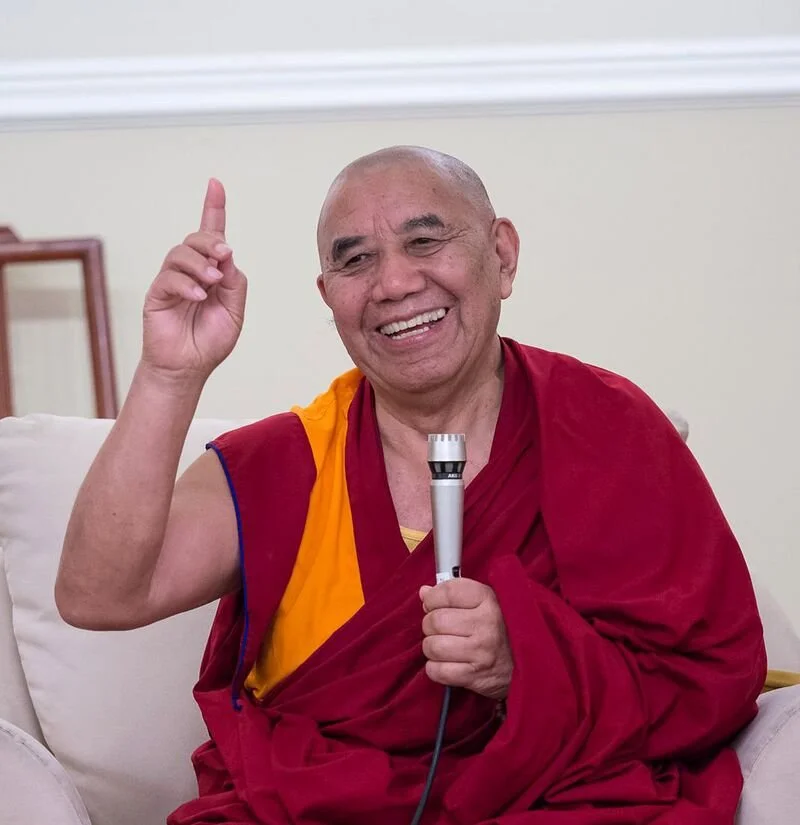
For nearly thirty-five years, I’ve been the close friend and supporter of Khensur Rinpoche Geshe Tsetan, a Tibetan Lama who works closely with the Dalai Lama, and with whom my wife and I did our small part to start a school in Ladakh. In his tradition, wisdom (prajna) and compassion (karuna) are the two essential wings of the path to enlightenment. How do we know if someone has true insight or is truly wise? Look at how they behave? Are they kind or are they imperious? Do they think only of themselves? Do they think only of those who believe as they do? If so, they are not wise. On Rinpoche’s path, the best way to develop wisdom is by focusing on the needs of others. This causes transcendence of ego-driven actions, supporting the view that we are all truly connected. I’ve witnessed many times how this worldview informs Rinpoche’s daily behavior, urging him toward humility and service, illustrating why interpretation of spiritual experiences matter. He too adheres to a worldview that provides healthy guardrails for interpreting unitive breakthroughs. Frankly, I think that even if Tibetans were wrong and no state of Buddha-like consciousness is possible, they are to be celebrated, for is it a bad thing to generate a culture wholly centered on compassion? I don’t think so. Let me end with a story.
One very snowy winter day, Rinpoche and I were driving in northern Maine to attend a lecture he was to give at the Bangor Theological Seminary. It was back in the day when gas pumps weren’t equipped to accept credit cards, so I had to go inside the station to pay my bill (it was also in a time when people were moral enough that the station didn’t require me to pre-pay). While I was in the station, Rinpoche got out of the car and began washing my windshield, also clearing my headlights. There were a few people around, so they began to gather, taking a look at this unusual person, dressed in maroon robes, with his dark skin and shaved head. As they gawked, Rinpoche smiled broadly and began hamming-it-up, gesturing broadly with the windshield washer, performing ballet-like moves. People were laughing and shaking their heads when I came outside, then a young woman walked up to me to ask, “Is he a Buddhist monk?” When I answered in the affirmative, she followed up by saying, “Then why are you letting him wash your windshield!?” I told her, “Frankly, I wouldn’t be able to stop him. He likes to help out. Yesterday he shoveled my driveway!” She was nonplussed, but the fact simply remained. Rinpoche sees helping out as a way to remember he’s just a person.
In the next blog, I’ll talk about interpretations of the perennial philosophy, and more about the relationship between experience and interpretation, but for now let me add an addendum to my story of that snowy day with Rinpoche. When we got back into the car, he asked me, “Why they look at me?” I said, “I doubt they’ve ever seen someone who looks like you. This is rural Maine.” He thought about that for a second and then pointed to the Christmas decorations in the gas station’s window. “Maybe,” he conjectured, “they think is Santa Claus?” We both laughed. “No,” I said, “Santa has a long beard and his robes are red, not maroon,” to which Rinpoche responded, “Well, maybe they think ‘Global Warming Santa’?” We laughed again. It made me think—and I’m just guessing here—that a kind heart includes a robust sense of humor.
The two photos: Rinpoche as he is today, at 90, and Batman and me yesterday, checking our selfie to decide if we like it.